
In industrial plants, insulation is an area that often remains invisible but directly determines operating costs, system efficiency and employee safety. Heat escaping from a hot steam line, moisture condensing on a cold line or a valve insulation that is rewrapped after every maintenance intervention are items that look small individually but accumulate throughout the year into a serious loss. A correctly designed insulation system reduces these losses while enabling the plant to operate more safely and more efficiently.
As Mod Endüstriyel Servisler, we approach the insulation solutions that differ according to the needs of each plant with a single engineering perspective. From pipelines to equipment insulation and from hot systems to cold lines, every application is planned by taking into account the operating conditions of the line and the priorities of the plant. Below you can find the main areas of our insulation solutions.
Why Is Insulation a Critical Investment?
The value of an insulation application is not limited to energy saving alone. Correct insulation provides several different benefits at the same time, and when these benefits come together the return on the investment becomes noticeably faster.
The first benefit is energy efficiency; the heat or the cold lost from an uninsulated line is reflected directly in the invoice as an energy cost. The second is process control; keeping the fluid at the desired temperature along the line supports production quality and continuity. The third is employee safety; reducing the risk of contact with high temperature surfaces is important in terms of occupational safety. The fourth is equipment life; preventing condensation in particular delays corrosion under insulation and allows pipes and equipment to stay in sound condition for longer.
Pipe Insulation
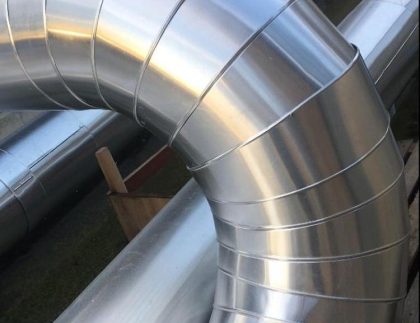
Pipelines are the area where insulation is applied most widely in an industrial plant. Pipes running along hot, cold and process lines become the main source both of energy loss and of safety risk when they are not insulated correctly.
In pipe insulation, the material and the thickness are determined according to the temperature of the line, the ambient conditions and the risk of condensation. Correctly selected insulation reduces heat loss while also keeping the surface temperature of the line at a safe level. Our pipe insulation solutions are designed according to the line structure and operating conditions of the plant.
Hot Insulation
Steam lines, thermal oil systems, boilers and process equipment operating at high temperature are the points where heat loss is most intense. Hot insulation keeps the heat inside these systems, which both increases energy efficiency and supports employee safety by lowering the surface temperatures in the surrounding area.
In high temperature applications, material selection and application detail are of great importance, because thermal bridges and incompletely insulated joints directly affect the overall performance of the system. Our hot insulation solutions are planned according to the needs of high temperature systems.
Refractory
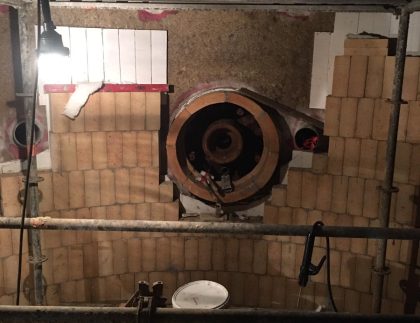
In furnaces, kilns and similar systems operating at very high temperatures, standard insulation materials are not sufficient. Refractory applications are a special insulation group designed to withstand temperatures of approximately +750°C to +1800°C.
Materials such as fire brick, refractory concrete, ceramic fibre and calcium silicate boards are selected according to the temperature of the application and the geometry of the furnace. A correctly designed refractory structure protects process safety while also supporting energy efficiency in high temperature systems.
Cold Insulation
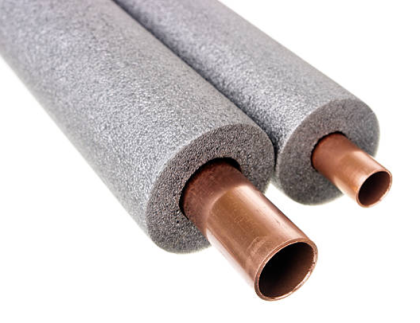
On cooling lines, chiller systems and process lines operating at low temperature, the priority is condensation control rather than heat loss. When the surface temperature falls below the dew point of the environment, moisture condenses; this prepares the ground both for energy loss and for corrosion under insulation.
For this reason, the vapour barrier application plays a critical role in cold insulation. A correctly designed cold line insulation prevents moisture from entering the system and protects both performance and equipment life. Our cold insulation solutions are designed according to the condensation and efficiency requirements of low temperature systems.
Bidirectional Insulation
Some process lines are exposed to both hot and cold ambient conditions at the same time because of their operating requirements. As a single direction insulation approach is not sufficient on these lines, controlling heat transfer and condensation together becomes important.
Bidirectional insulation is applied with multi layer structures and special vapour stop barriers for this requirement. The correct sequence of the layers helps the system to work in a balanced way in terms of both thermal insulation and moisture control.
Insulation Jacket
On valves, flanges, measurement points and equipment that receives frequent maintenance, conventional wrapped insulation is a solution that has to be removed and remade at every intervention. At these points, removable insulation jackets provide both ease of maintenance and a cost advantage in the long term.
Because insulation jackets can be removed and refitted within minutes during maintenance, they eliminate the problem of insulation that is never put back. When they are produced specifically for the equipment, insulation performance is maintained continuously. Our insulation jacket solutions are designed in removable form according to the maintenance requirements of valves and equipment.
GRE Roof Insulation
In systems where glass reinforced epoxy (GRE) materials are used, particularly on the roofs of large diameter tanks, insulation becomes decisive in terms of temperature control and structural integrity. Such applications mostly arise in the demanding conditions of refinery sites.
GRE roof insulation is designed to provide a structure resistant to high humidity and chemical effects. Material selection and installation technique are determined in line with refinery safety standards; this approach both reduces heat losses and contributes to maintaining process stability inside the tank.
Fire Insulation
Fire insulation is a special insulation area that gives priority to the safety of life and property in a plant. The aim is to delay the spread of the fire and to keep critical equipment and escape routes safe for as long as possible.
Materials such as fire retardant coatings, ceramic fibres and stone wool based boards are used in these systems. The material and the application detail are planned according to the location of the line and the fire safety priorities of the plant.
Industrial Insulation Engineering
Insulation produces value when it is designed as a whole rather than as the sum of individual materials. Which line is to be insulated with which material, at which thickness and with which cladding should be evaluated together according to the energy, process and safety priorities of the plant.
Our industrial insulation approach is based on this holistic view that keeps the entire plant in mind. From material selection to application detail and from inspection to maintenance planning, every stage is designed according to the real needs of the plant. In this way, insulation ceases to be a one off application and becomes a long term efficiency investment.
For an Insulation Solution Suited to Your Plant
The line structure, operating temperatures and priorities of every plant are different; for this reason, the right insulation solution is also determined through an assessment specific to the plant. As Mod Endüstriyel Servisler, we offer engineering based solutions for all your insulation requirements, from hot and cold lines to pipe and equipment insulation.
You can get in touch with us to review your insulation requirements and to determine the most suitable solution for your plant.
Frequently Asked Questions
What is the difference between hot insulation and cold insulation?
In hot insulation, the priority is to keep the heat inside high temperature systems and prevent loss. In cold insulation, the priority is condensation control; by preventing the formation of moisture on the surface, the aim is to avoid both energy loss and corrosion under insulation. For this reason, the vapour barrier application is of critical importance on cold lines.
Which insulation solution is suitable for valves and flanges?
On valves, flanges and equipment that receive frequent maintenance, a removable insulation jacket is preferred. Unlike conventional wrapped insulation, a jacket can be removed and refitted within minutes at every maintenance intervention, so repeated labour is eliminated and insulation performance is maintained continuously.
How are the insulation material and thickness determined?
The material and the thickness are determined according to the operating temperature of the line, the ambient conditions, the risk of condensation and the energy, process and safety priorities of the plant. Instead of a single standard, an assessment made according to the real requirement of each line gives a more accurate result.
How does an insulation investment pay for itself?
Insulation provides several benefits at the same time, such as energy saving, process control, employee safety and equipment life. When these benefits come together, the return on the investment becomes noticeably faster, particularly in systems that operate continuously.
In which cases is refractory insulation required?
In furnaces, kilns and similar systems operating at very high temperatures, standard insulation materials are not sufficient. In applications of approximately +750°C to +1800°C, refractory insulation made with materials such as fire brick, refractory concrete and ceramic fibre is preferred. These systems both protect process safety and support energy efficiency at high temperature.
On which lines is bidirectional insulation preferred?
Bidirectional insulation is used on process lines that are exposed to both hot and cold ambient conditions at the same time because of their operating requirements. As heat transfer and condensation are controlled together in these applications, multi layer structures and special vapour stop barriers are evaluated as a whole.
Why is fire insulation important?
Fire insulation aims to protect the safety of life and property by delaying the spread of the fire. It is applied with materials such as fire retardant coatings, ceramic fibres and stone wool based boards; it helps critical equipment and escape routes to stay safe for a longer period.